
4609 Convoy Street, Ste A San Diego, CA 92111 (858) 268-0888


DIM SUM INTRODUCTION

A Brief History of Dim Sum
Dim sum has its roots in southern China, particularly in Guangdong province, and dates back over a thousand years. It began along the ancient Silk Road, where travelers stopped at teahouses to rest and enjoy light snacks with tea. These small bites were designed to “touch the heart” rather than fill the stomach—hence the name dim sum (點心), which loosely translates to “little touches of the heart.”
Over time, these tea snacks evolved into a rich culinary tradition known as yum cha, meaning “drink tea.” Families and friends would gather at teahouses to enjoy tea alongside dozens of small dishes, turning meals into a social, leisurely experience. Today, dim sum is enjoyed worldwide and continues to be a celebration of sharing, variety, and craftsmanship.
How Dim Sum Is Eaten (and the Role of Tea)
Dim sum is traditionally eaten family-style and shared at the table. You can see, smell, and pick the dim sum dishes right off carts pushed throughout the dining hall. The dishes arrive in small portions, allowing everyone to sample a wide variety of flavors and textures in one meal.
Types of Dim Sum
Dim sum includes a wide variety of dishes, generally falling into these categories:
Steamed Dishes – dumplings and buns served hot and delicate
Baked Items – flaky pastries and sweet buns
Fried Dishes – crispy rolls and savory bites
Rice & Noodle Rolls – soft, silky textures with savory sauces
Desserts – light sweets to end the meal
Each dish is carefully crafted to balance flavor, texture, and presentation.
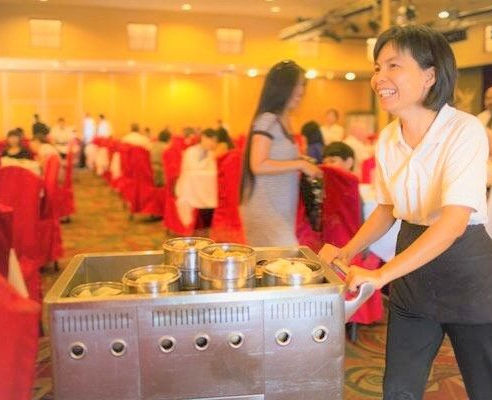
Dim sum is served traditionally off steam carts at your tableside

Jasmine loose leaf tea, mango pudding, and baked barbecue pork buns.
Tea
Tea is an essential part of the dim sum experience. It helps cleanse the palate and complements the richness of the food. Traditionally, they are served as loose leaf teas in a pot. Popular dim sum teas served at Jasmine are:
-
Jasmine Tea – light and fragrant green tea
-
Chrysanthemum Tea – floral and soothing, herbal
-
Pu-erh Tea – earthy and bold black tea, great with fried dishes
-
Oolong Tea – balanced and aromatic black tea
In traditional settings, refilling tea is part of the service culture—simply leaving the teapot lid slightly open signals that you’d like a refill of hot water.
Dim Sum Pricing
Dim sum is typically priced by the dish, not by portion size. Prices depend on ingredients and preparation. Traditionally, dishes were grouped into categories called "small," "medium," or "large" plates. This structure encourages guests to order multiple dishes and explore a wide range of options—perfect for sharing and discovering new favorites.
Most Popular Dim Sum Dishes
If you’re new to dim sum, these classic favorites are a great place to start:
-
Har Gow (Shrimp Dumplings) – translucent wrappers filled with juicy shrimp
-
Siu Mai (Pork Dumplings) – open-topped dumplings with pork and shrimp
-
Char Siu Bao (BBQ Pork Buns) – soft, fluffy buns with sweet-savory pork
-
Cheung Fun (Rice Noodle Rolls) – silky rice noodles with meat or shrimp
-
Lo Bak Go (Turnip Cake) – pan-fried savory radish cake
-
Egg Tarts – flaky pastry with smooth egg custardWhether you’re here for a quick bite or a long, leisurely meal, dim sum is meant to be shared, savored, and enjoyed together.
We invite you to explore, try something new, and experience this timeless tradition one dish and tea cup at a time.

Each table is given a dim sum card that is stamped as dishes are served to your table. Every dish belongs to a unique category, with each category priced differently.